Buying land in Clermont can feel simple at first. You find a few acres, picture the house or hobby farm you want, and start dreaming. But land works differently than a move-in-ready home, and the details that matter most often sit below the surface. This guide will help you focus on the practical issues that can shape your plans, budget, and timeline so you can move forward with more confidence. Let’s dive in.
Start With Jurisdiction and Zoning
Before you think about house plans, fencing, or dividing a tract later, confirm whether the property is inside Clermont town limits or in unincorporated Hall County. That one detail affects which rules apply to the parcel and what approval path you may need.
Clermont has its own Planning and Zoning Ordinance, while Hall County uses its Unified Development Code for county properties and permits. Permitted uses, setbacks, and development standards can change depending on which side of that line your land sits on.
Clermont zoning districts include categories such as Residential I, Agriculture Residential III and IV, Highway Business, Town Center, and several planned development districts. Hall County also regulates agricultural, residential, commercial, industrial, and mixed-use districts through its own code.
If you are buying acreage for a future home, small farm use, or possible subdivision, do not assume the current appearance of the land tells you what is allowed. Hall County recommends speaking with a staff planner early because acreage, road frontage, and setbacks can directly affect whether a parcel can be built on or split as intended.
Verify Boundaries Before You Commit
Land listings can make a tract look straightforward, but physical use and legal boundaries are not always the same thing. Before you buy, confirm city limits, county lines, land lot lines, easements, and setback limits.
This matters because a great-looking homesite on paper may overlap with an easement, buffer, or setback area that limits where you can build. If your goal is privacy, extra outbuildings, or a certain layout, those details can change the whole plan.
A recorded plat or survey may also be needed before a building permit can be issued. Hall County advises buyers to start with a staff planner and then hire a surveyor to create a new recorded survey if needed.
Access Can Make or Break the Property
Acreage buyers often focus on the land itself and overlook access. In reality, road access and driveway approvals can be one of the first real-world hurdles after closing.
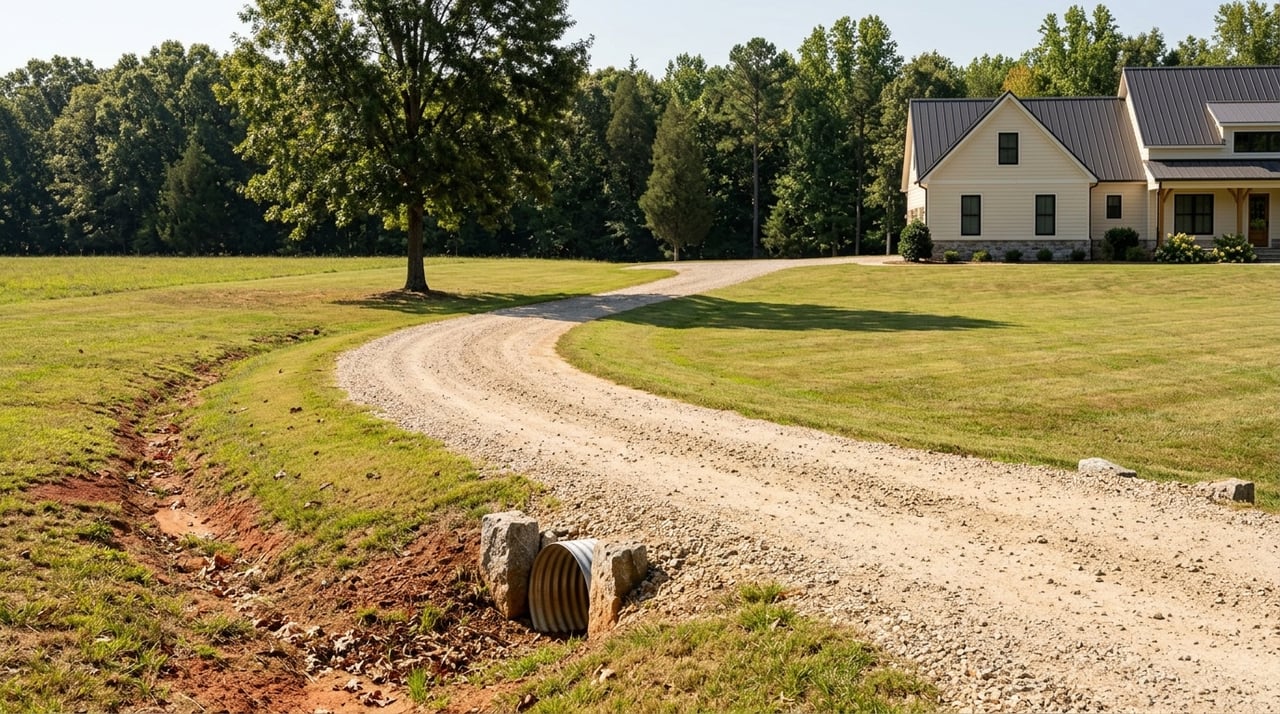
Hall County says residents need a permit for a secondary driveway off a county-maintained road or for a property-access-only driveway. New construction or changes to driveways and culverts on county right-of-way also require a permit.
If the property access comes from a state route, Clermont requires a Georgia DOT permit. If access comes from a county route, Hall County permission is required.
That means you should treat access as its own due diligence item, not a small checkbox. A tract with legal access is not always the same as a tract with easy, affordable, build-ready access.
Plats and Subdivision Plans Need Early Review
If you may want to divide land later, ask that question early. Hall County says subdivision eligibility depends on acreage, road frontage, and access to public water, public sewer, or septic.
Hall County defines a minor subdivision as no more than six conforming lots, parcels, tracts, or building sites during a 12-month period. That is useful if you are thinking about a family split, future resale strategy, or building on one portion and keeping the rest.
The county reviews plats digitally through Accela, and the review typically takes three to four weeks. Those plats move through Planning, Engineering, and Environmental Health before a digitally stamped plat can be recorded.
In practical terms, this means a future split is never something to casually assume. If dividing the property is part of your long-term plan, build that research into your buying timeline.
Utilities and Water Need Clear Answers
One of the biggest surprises with acreage is how often utilities are still a question mark. A Clermont mailing address does not automatically mean a tract has public water or other ready-to-use services.
Hall County does not provide water service countywide and directs residents to the appropriate municipality. For Clermont-area properties, buyers should contact the City of Clermont for water service or billing questions.
You should verify whether a parcel has a public water meter, a well, or access to a private community system. That answer affects both your budget and your building plan.
Clermont’s building-permit procedures require proof of water before permit issuance. That proof can be a paid meter, a well permit, or approval to connect to a private community water system.
Septic Feasibility Is a Core Step
If the land will rely on septic, move that issue to the top of your checklist. Septic feasibility is not something to sort out after closing.
Hall County Environmental Health handles septic systems and well permits. The county says residential building permits for septic-served properties must first be reviewed by Environmental Health.
Hall County also offers a Site Prior to Purchase evaluation for on-site sewage systems, and that visit may require a soil evaluation. That can give you valuable information before you commit to land that may not support your intended homesite.
Clermont’s permit process also requires either a septic permit or an Environmental Health approval letter before a building permit is issued. If the property does not have public water and sewer, plans for a well or septic system must be approved by the county health department.
Wells Bring Their Own Rules and Costs
If a tract will need a private well, treat that as more than a utility line item. Well placement, permitting, and long-term maintenance all matter.
Georgia DPH says wells should be located away from known pollutant sources and must meet minimum setbacks from sewer lines, septic tanks, absorption fields, cesspools, and animal enclosures. Wells must also be installed by a licensed water-well contractor, and the contractor must notify the county health department before drilling.
DPH also recommends annual bacterial testing and chemical screening every three years. For buyers planning a full-time home on acreage, that is an important part of ongoing ownership, not just the purchase process.
Site Work Often Changes the Budget
Raw land is rarely ready for construction the day you close. Even if the price per acre looks appealing, site prep costs can quickly reshape the total investment.
Hall County says a minor land disturbance permit may be available for disturbances under one acre. Larger clearing or grading can move into the development review process.
The county’s site-plan checklist also requires items such as easements, driveways, state waters, stream buffers, wetlands, flood plains, and the locations of wells and septic systems. If your dream homesite sits near a stream, on sloped land, or across a tricky access point, planning costs may rise before building even begins.
This is one reason two similarly sized Clermont-area tracts can have very different real-world value. What matters is not just the acreage count, but how usable that land is for your goals.
Why Price Per Acre Can Mislead
Many buyers shop land by price per acre. That can be a helpful starting point, but it is not the full picture.
Valuation factors can include zoning or use restrictions, road frontage and access, available utilities, easements and rights-of-way, and soil characteristics. A lower asking price does not always mean the better opportunity if the tract still needs major work or approvals.
A parcel may require a survey, driveway permit, clearing, grading, erosion control, utility extension, well work, septic approval, or subdivision review before it functions the way you want it to. Those steps are often the difference between a property that looks affordable and one that truly fits your plans.
Conservation Use May Matter for Larger Tracts
If you are considering a larger property with agricultural use, Hall County’s conservation-use program may be worth asking about. The county describes Conservation Use Assessment as a favorable tax covenant for qualifying agricultural uses.
In general, it requires a 10-year commitment, and applications are taken from January 1 through April 1. Hall County also warns that transfers or partial sales can trigger penalties if the remaining tract no longer qualifies.
This is one more reason to think beyond the purchase price alone. Your long-term use, ownership timeline, and future resale plans all matter when you buy acreage.
Build the Right Local Team
A smooth Clermont land purchase usually depends on getting the right people involved early. The most useful professionals are often a licensed surveyor, Hall County Environmental Health or a septic specialist, a licensed well driller if needed, and a local real estate agent who understands the difference between Clermont and Hall County requirements.
Hall County specifically recommends speaking with a staff planner early in the process. That early clarity can help you avoid buying land that does not match your intended use.
When you are buying lots and acreage in North Georgia, local knowledge matters. A practical, locally grounded approach can help you ask better questions before money is committed and surprises become expensive.
If you are thinking about buying land or acreage in Clermont, working with a team that understands Hall County, local property types, and the extra steps that come with rural and specialty properties can make the process far less stressful. To talk through your goals and next steps, reach out to Chris McCall Realty.
FAQs
What should you check first when buying land in Clermont?
- Confirm whether the parcel is inside Clermont town limits or in unincorporated Hall County, then verify zoning, setbacks, and permitted uses for that specific jurisdiction.
Does acreage in Clermont always have public water available?
- No. You should verify whether the tract has a public water meter, a private well, or access to a private community water system.
Do you need septic approval before building on Hall County land?
- Yes. Hall County says septic-served residential building permits must first be reviewed by Environmental Health, and Clermont also requires septic documentation or an approval letter before permit issuance.
Can you split land or acreage in Hall County later?
- Possibly, but eligibility depends on factors such as acreage, road frontage, and access to public water, public sewer, or septic.
Why is price per acre not enough when comparing Clermont land?
- Because access, utilities, soil conditions, easements, permits, surveys, grading, and septic or well needs can all affect the property’s true cost and usability.